
Telescopic Prop
A telescopic prop (telescopic shore / steel prop) is an adjustable steel support used under slab and beam formwork. Espada İskele supplies 3–6 m painted and galvanized options for precise level setting before pouring. List prices are not published — request a quote. Sales and delivery cover projects across Turkey.
Browse sizes and models in this product group.
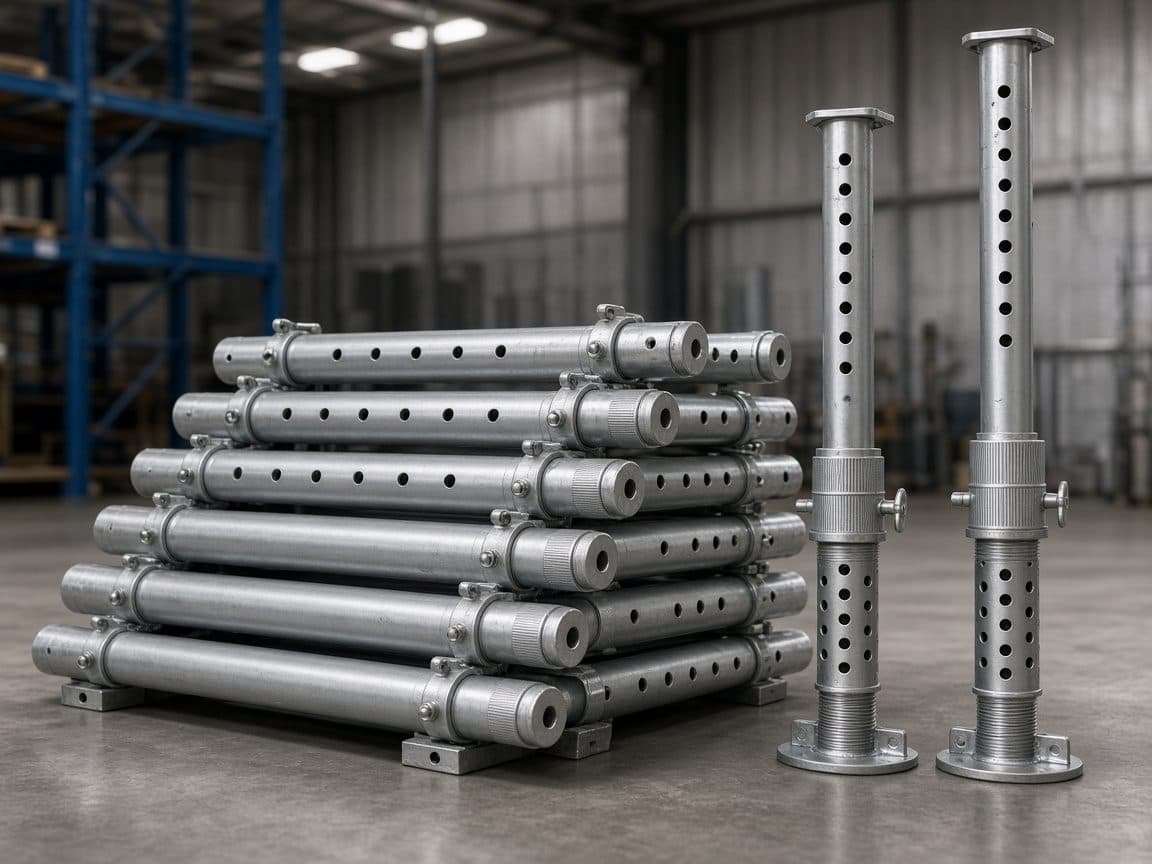 Telescopic Prop3 Metre Boyalı Teleskopik Direk3–6 m adjustable telescopic prop (shore); painted or galvanized. Pricing by quote.Go to product
- Telescopic Prop3 Metre Galvanizli Teleskopik Direk3–6 m adjustable telescopic prop (shore); painted or galvanized. Pricing by quote.Go to product
- Telescopic Prop3.5 Metre Boyalı Teleskopik Direk3–6 m adjustable telescopic prop (shore); painted or galvanized. Pricing by quote.Go to product
- Telescopic Prop3.5 Metre Galvanizli Teleskopik Direk3–6 m adjustable telescopic prop (shore); painted or galvanized. Pricing by quote.Go to product
- Telescopic Prop4 Metre Boyalı Teleskopik Direk3–6 m adjustable telescopic prop (shore); painted or galvanized. Pricing by quote.Go to product
- Telescopic Prop4 Metre Galvanizli Teleskopik Direk3–6 m adjustable telescopic prop (shore); painted or galvanized. Pricing by quote.Go to product
- Telescopic Prop4.5 Metre Boyalı Teleskopik Direk3–6 m adjustable telescopic prop (shore); painted or galvanized. Pricing by quote.Go to product
- Telescopic Prop4.5 Metre Galvanizli Teleskopik Direk3–6 m adjustable telescopic prop (shore); painted or galvanized. Pricing by quote.Go to product
- Telescopic Prop5 Metre Boyalı Teleskopik Direk3–6 m adjustable telescopic prop (shore); painted or galvanized. Pricing by quote.Go to product
- Telescopic Prop5 Metre Galvanizli Teleskopik Direk3–6 m adjustable telescopic prop (shore); painted or galvanized. Pricing by quote.Go to product
- Telescopic Prop5.5 Metre Boyalı Teleskopik Direk3–6 m adjustable telescopic prop (shore); painted or galvanized. Pricing by quote.Go to product
- Telescopic Prop5.5 Metre Galvanizli Teleskopik Direk3–6 m adjustable telescopic prop (shore); painted or galvanized. Pricing by quote.Go to product
- Telescopic Prop6 Metre Boyalı Teleskopik Direk3–6 m adjustable telescopic prop (shore); painted or galvanized. Pricing by quote.Go to product
- Telescopic Prop6 Metre Galvanizli Teleskopik Direk3–6 m adjustable telescopic prop (shore); painted or galvanized. Pricing by quote.Go to product
ESPADA İSKELE
What Is a Telescopic Prop?
A telescopic prop (also called a telescopic shore or steel prop) is an adjustable steel formwork support used under slab and beam formwork. Nested tubes and a fine-adjustment nut set working height before the pour; the spacing between props follows slab load and formwork geometry.
Espada İskele manufactures telescopic props with 3–6 m maximum working height, in painted or galvanized finish. Typical pipe wall thickness is 2–4 mm and base-plate thickness 4–5 mm. Flat, U or T heads and tripods are specified with the order. Sales and delivery cover projects across Turkey.
List prices are not published online: telescopic prop pricing depends on working height, coating, quantity and delivery point. Share those details for a quote. Correct prop length and coating keep formwork levels stable through the pour.
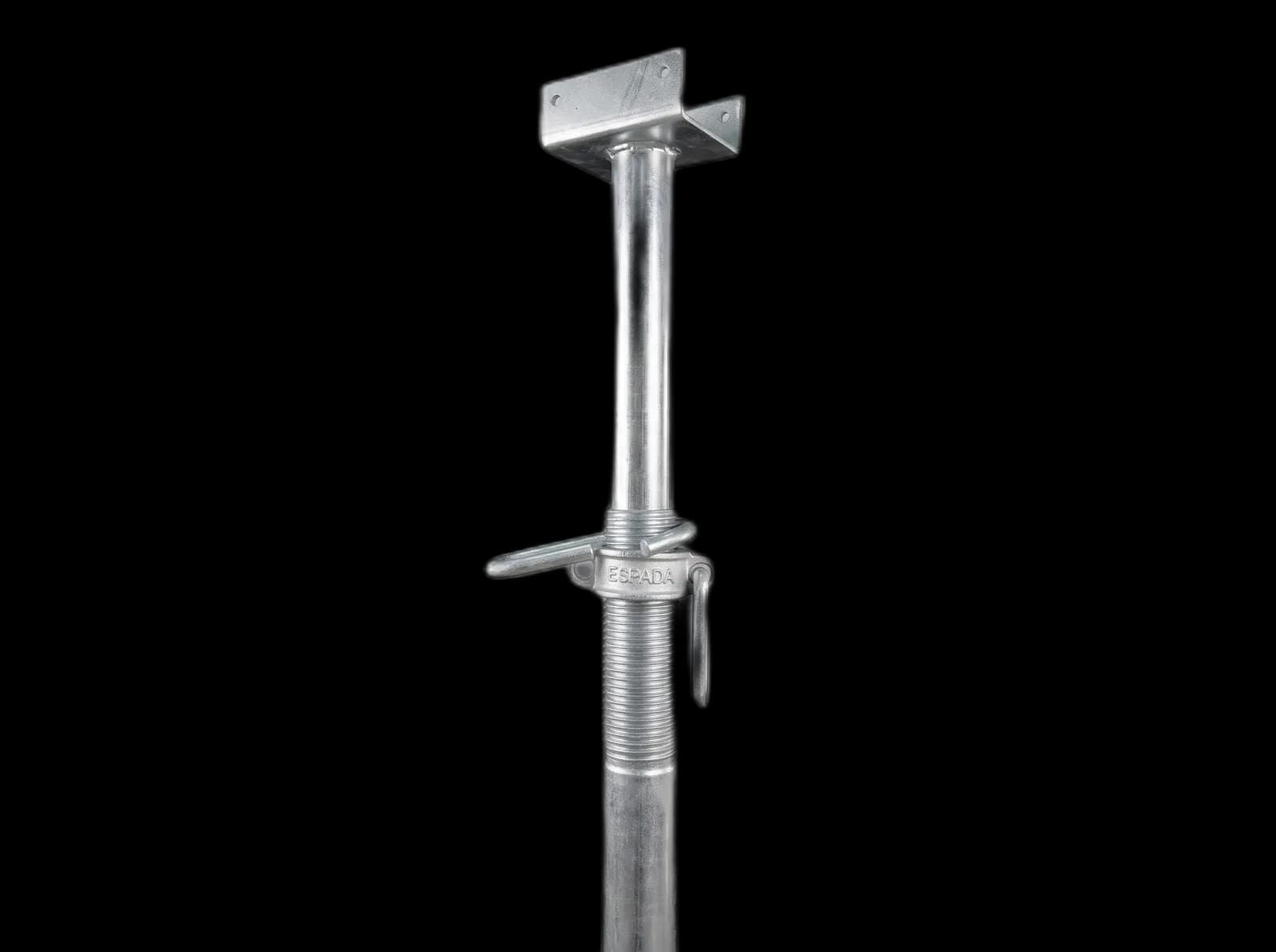
Telescopic Prop Specs and Construction
On site the same product is also called a telescopic shore, steel prop, formwork prop, demir direk or teleskopik dikme. Below: typical tube sizes, how working height is set, and what to check before you order.
Technical specifications
- Outer tube
- Ø60 mm diameter
- Inner tube
- Ø48 mm diameter
- Wall thickness
- Standard 2 - 2.5 - 3 - 3.5 - 4 mm and custom
- Base plate
- Standard 3 - 4 - 5 mm and custom
- Working height
- Standard 3 m to 6 m and custom sizes
- Finish
- Painted or galvanized
- Head options
- Flat / U / T
- Standards
- TS EN 1065 class
How height is set
- Coarse setRaise the inner tube and lock with the G-pin through the hole resting on the nut.
- Fine adjustTurn the mechanism nut for millimetre-level formwork level before the pour.
- Head and bearersFit flat, U or T head as ordered; place main and secondary bearers on the head.
What to check before you buy
- Pipe wall thicknessWall thickness (typically 2–4 mm) should match slab load and span on the drawing.
- Adjustment mechanismCoarse pin holes plus a fine-adjustment nut must hold height under load on site.
- Surface finishPainted suits typical cycles; galvanized adds corrosion protection for longer outdoor exposure.
- Working heightMatch closed–open range to soffit height so the nut still has travel left after coarse set.
What are the main parts of a telescopic prop?
A telescopic prop is made up of main parts such as the inner tube, outer tube, adjustment nut, adjustment pin, bottom base plate and top head plate. Each part contributes to height setting, structural integrity and load transfer. This section covers the main parts, their roles and how they work so you can understand the product build in detail.
Inner tube
Fits inside the outer tube and forms the extendable section of the telescopic prop. Pin holes may be spaced along it; those holes allow the prop to be set at different heights.
See on diagramOuter tube
Forms the main body of the telescopic prop and surrounds the inner tube to guide it. It plays a key role in structural strength and in carrying load along the prop.
See on diagramAdjustment nut and mechanism
Provides precise setting of working height. The nut moving on the threaded section helps adjust the position between inner and outer tubes and bring the prop to the required height.
See on diagramG-pin
Passes through matching holes in the inner tube to lock the coarse height setting. Depending on design, a safety clip or lock helps keep the pin from coming out unintentionally.
See on diagramBottom base plate
Lets the prop sit on the ground or a supporting surface below. It forms the contact face that helps transfer load into the ground. Plate size and connection details can vary by model.
Top head plate ( Flat / U / T )
Sits at the top of the prop and forms the contact face with the supported formwork member. Flat, U and T heads are the common types. It helps transfer load from the formwork into the telescopic prop. Shape, size and connection details can differ by product design.
See on diagram
Why choose an adjustable telescopic prop?
Adjustable working height
Inner and outer tubes let telescopic props adapt to different working heights. That flexibility suits projects with varying floor-to-soffit dimensions.
Practical assembly and striking
Pin height setting and the threaded mechanism make erection and striking easier. With correct procedures, site workflow can run more efficiently.
Durable steel construction
Steel-tube telescopic props are designed for under-formwork support. Capacity depends on material properties, tube sizes, connection details and working height.
Reusable design
When used correctly, inspected regularly and maintained properly, telescopic props can be reused across projects. That supports long-term use of formwork shores and efficient use of resources.
Compatible with different formwork systems
With suitable technical specs, adjustable telescopic props can support slab and beam formwork. Choosing the right model for required height and load helps build a safe support system.
How to Choose a Telescopic Prop
Working height, coating and head type are decided together. The wrong mix throws off formwork level and take-off — confirm these four points before you pick a model below.
Working height
Espada lists telescopic props (telescopic shores) from 3 to 6 m maximum working height. Match closed–open range to slab soffit height so the fine-adjustment nut still has travel left on site.
Browse working heightsPainted or galvanized
Painted suits typical indoor cycles; galvanized adds corrosion protection for longer outdoor exposure. Each height × finish pair is a separate telescopic prop model in the take-off.
Browse coatingsHead type (flat / U / T)
Models are split by height and finish; flat, U or T heads and tripods are specified on the order. U heads reduce slip on H20 and beam lines; flat or T heads follow your formwork detail.
What to send for a quote
Working height, painted or galvanized preference, quantity, delivery point in Turkey and the formwork drawing if you have it. Clear inputs speed the technical reply.
Request a quote
Quantity estimate
Telescopic Prop Calculator
Estimate how many telescopic props you need from slab area or length × width. Optionally enter clear height to see matching working-height models. This is a planning estimate — final take-off follows the formwork drawing.
Inputs
Calculated area100 m²
- Area estimate
- 105 pcs
- Spare
- 6 pcs
- Suggested quantity
- 111 pcs
Recommended working heights
Enter a clear / working height to see recommended models.
Estimate only. Confirm quantity on the formwork drawing before ordering.
Quote-based pricing
Telescopic Prop Prices
Espada İskele does not publish fixed list prices for telescopic props (steel props). Your quote depends on working height, painted or galvanized finish, quantity and delivery location anywhere in Turkey.
Choose height and finish
Pick a working height and painted or galvanized finish from the options above so the quote matches the model you need.
View height and finish optionsShare quantity and delivery
Estimate quantity with the calculator above, then share delivery city or district in Turkey — that is enough to start a project quote.
Open the prop calculatorGet a project quote
We return a project-specific offer. No invented price ranges are shown on this page; pricing is always by quote.
Open the prices hub
Same path for steel prop and telescopic shore price requests.
Telescopic Prop Applications
Espada İskele telescopic props (telescopic shores) are used under slab and beam formwork before the pour, and wherever working height must be set on site.
Slab formwork props
Telescopic prop support under floor formwork before concrete pouring.
Beam formwork shores
Adjustable telescopic shores on beam lines and beam soffits.
Irregular deck geometries
Formwork support for waffle, multi-beam and non-uniform decks.
Short-span storeys
Temporary props where columns or walls are scattered across the plan.
On-site level tuning
Temporary shoring and bracing when closed–open length is finalized on site.
Stock by length and coating
Projects that standardize telescopic prop stock by working height and finish.
Which details should you confirm before specifying a telescopic prop?
Frequently Asked Questions
What is a telescopic prop used for?
It is an adjustable steel shore under slab and beam formwork. Working height is set before the pour; prop spacing follows slab load and formwork geometry.
Which working heights are available, and what is closed–open length?
Espada İskele lists telescopic props with 3–6 m maximum working height; each height is offered painted or galvanized. Closed length is the shortest setting; open (working) length is the height under the formwork — leave fine-adjustment room on the nut.
Should I choose painted or galvanized?
Painted props suit typical site use; galvanized props add corrosion protection for longer outdoor exposure. Confirm the finish with your project conditions when requesting a quote.
How are load capacity and wall thickness decided?
Pipe wall and load class follow the formwork drawing, slab thickness and span. TS EN 1065 defines strength classes related to extension length. Share the drawing so Espada can confirm height, coating and wall thickness for the take-off.
Where is head type (flat / U / T) selected?
Models are separated by height and finish. Flat, U or T heads and tripods are specified with the order against your formwork detail; U-heads help on H20 and beam lines.
How do I get a price quote, and what should I share?
There is no fixed online list price and no published minimum order. Share working height, painted or galvanized preference, quantity, delivery location in Turkey and, if available, the formwork drawing. Espada prepares a project quote — see “Telescopic Prop Prices” on this page.
How are telescopic props installed and used safely?
Prepare a level base, set height with the pin and fine-adjustment nut, fit the head, then place bearers. Do not exceed maximum working height; keep props plumb; use a tripod when free-standing props must stay upright. Strike only after required concrete strength — never drop props. Follow site rules and the project engineer.
Do you sell or rent telescopic props?
This page is for purchasing Espada telescopic props (sales and nationwide delivery in Turkey). Share height, finish, quantity and delivery location for a sales quote.
How do I estimate how many telescopic props I need?
Use the telescopic prop quantity calculator on this page to estimate quantity from area or length × width. Final take-off still depends on slab load and formwork layout — share the drawing with your quote so Espada can confirm quantity.
Where in Turkey do you ship, and how does delivery work?
Espada ships telescopic props nationwide, including major cities such as Istanbul, Ankara and Izmir and other provinces. Method and timing depend on quantity and the delivery province or district and are confirmed in the quote.
Are steel prop, formwork prop and telescopic shore the same product?
On site those names usually mean an adjustable under-slab shore. This page covers Espada’s new telescopic prop models by working height and painted or galvanized finish.
What do kalıp direği, inşaat direği and kalıp altı direk mean?
In Turkish site language they are common synonyms for an adjustable under-slab steel shore — the same product family as a telescopic prop / demir direk / teleskopik dikme. Espada lists models by 3–6 m working height and painted or galvanized finish.
What should I check before buying a telescopic prop?
Confirm pipe wall thickness against the drawing, that the pin-and-nut mechanism holds under load, painted vs galvanized for exposure, and that closed–open height matches soffit level with fine-adjustment travel left. See the technical specs section on this page, then pick height and finish.
What is the difference between telescopic scaffolding and a telescopic prop?
A telescopic prop is a single adjustable shore under formwork. “Telescopic scaffolding” may loosely mean the same shores or a support system; flange and façade scaffolds are separate product groups. For prop take-off, choose height and finish here and request a quote.
Related pages
Related formwork products
Request a Telescopic Prop Quote
Share working height, painted or galvanized finish, quantity and delivery location. Espada İskele confirms the telescopic prop take-off for your formwork drawing.