
Timber
Espada İskele timber covers softwood used in formwork frames and auxiliary site woodwork. Black pine, Scots pine, fir, spruce and an imported group are listed with Espada’s stated 5×10 cm and 10×10 cm cross-sections. Stock fit, length, moisture and quantity are confirmed per project. No fixed list price is published.
Browse sizes and models in this product group.
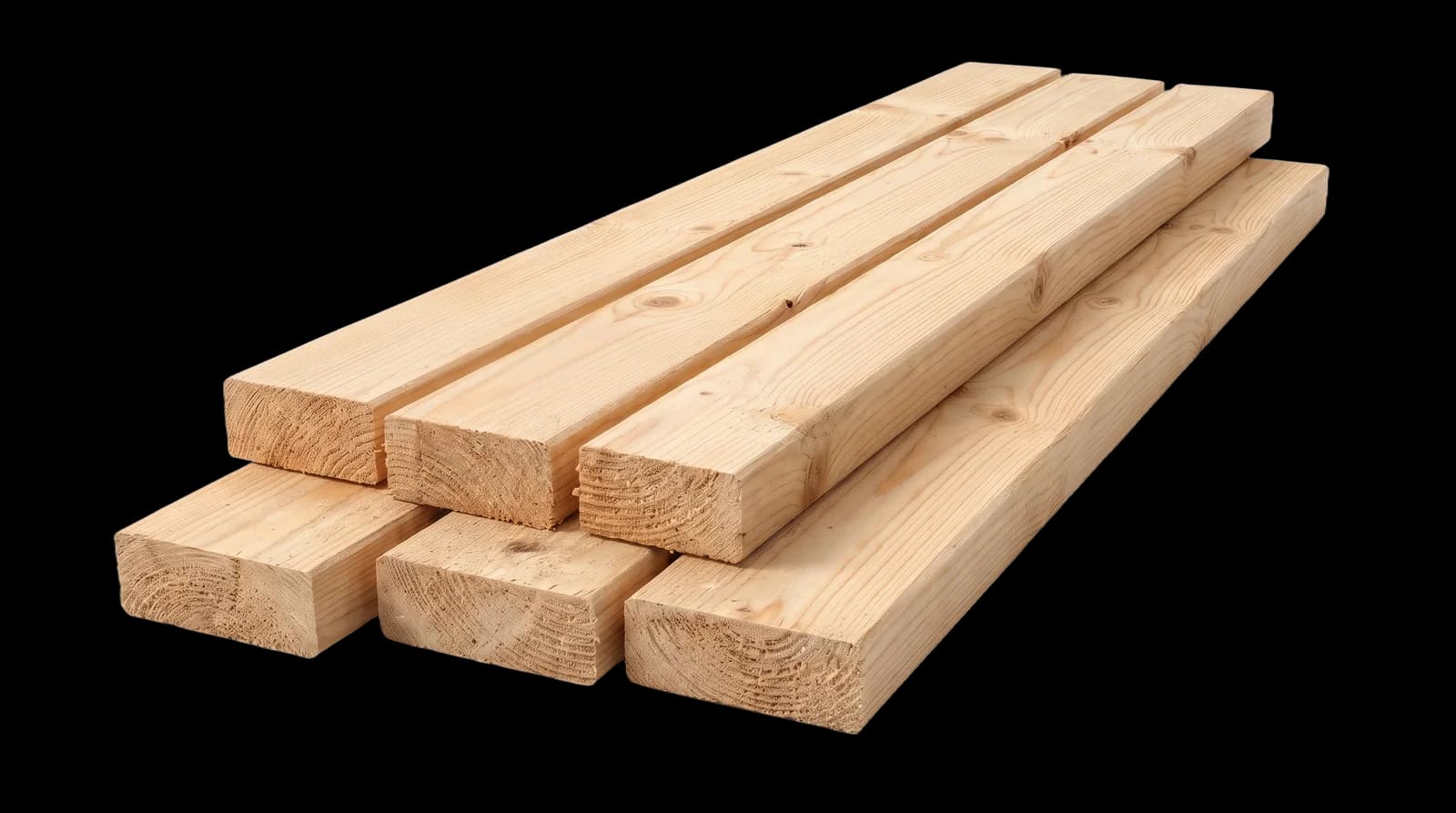 Timber5 × 10 cm Black pine TimberBlack pine, Scots pine, fir, spruce and imported timber for formwork and site work; 5×10 and 10×10 cm sections.Go to product
- Timber5 × 10 cm Scots pine TimberBlack pine, Scots pine, fir, spruce and imported timber for formwork and site work; 5×10 and 10×10 cm sections.Go to product
- Timber5 × 10 cm Fir TimberBlack pine, Scots pine, fir, spruce and imported timber for formwork and site work; 5×10 and 10×10 cm sections.Go to product
- Timber5 × 10 cm Spruce TimberBlack pine, Scots pine, fir, spruce and imported timber for formwork and site work; 5×10 and 10×10 cm sections.Go to product
- Timber5 × 10 cm Imported TimberBlack pine, Scots pine, fir, spruce and imported timber for formwork and site work; 5×10 and 10×10 cm sections.Go to product
- Timber10 × 10 cm Black pine TimberBlack pine, Scots pine, fir, spruce and imported timber for formwork and site work; 5×10 and 10×10 cm sections.Go to product
- Timber10 × 10 cm Scots pine TimberBlack pine, Scots pine, fir, spruce and imported timber for formwork and site work; 5×10 and 10×10 cm sections.Go to product
- Timber10 × 10 cm Fir TimberBlack pine, Scots pine, fir, spruce and imported timber for formwork and site work; 5×10 and 10×10 cm sections.Go to product
- Timber10 × 10 cm Spruce TimberBlack pine, Scots pine, fir, spruce and imported timber for formwork and site work; 5×10 and 10×10 cm sections.Go to product
- Timber10 × 10 cm Imported TimberBlack pine, Scots pine, fir, spruce and imported timber for formwork and site work; 5×10 and 10×10 cm sections.Go to product
ESPADA İSKELE
What is timber?
Timber is sawn softwood used on formwork frames, auxiliary site woodwork, roofing helpers, packaging and joinery. Trade talk is often in cubic metres (m³).
Espada İskele lists black pine, Scots pine, fir, spruce and an imported group together with Espada’s stated 5 × 10 cm and 10 × 10 cm sections as products. Stock fit is confirmed in the quote.
Below: species notes, a size guide, volume math and buying tips. Density and moisture figures are general references unless marked Espada-confirmed. No fixed list price is published.
Send section, species, length need and quantity via Get a quote.
Timber species and Espada sections
Species cards are general summaries. Section rows link to indexable product pages.
Black pine
Density (dry, reference): 510–550 kg/m³. Yetişme yeri, nem ve kurutmaya göre değişir. Espada ürün speki değildir.
Scots pine
Density (dry, reference): 480–490 kg/m³. EN 338 C sınıfı ortalama yoğunlukları nem referansına bağlıdır.
Fir
Density (dry, reference): 400–430 kg/m³. Tür ve menşeye göre değişir.
Spruce
Density (dry, reference): 410–440 kg/m³. Not an Espada product spec.
Imported
Specific imported species are not fixed yet; origin and grade are confirmed in the quote.
| Product | Section | Species | Sample volume |
|---|---|---|---|
| 5 × 10 cm Black pine Timber | 5 × 10 cm | Black pine | ~0.015 m³ per piece at 3 m |
| 5 × 10 cm Scots pine Timber | 5 × 10 cm | Scots pine | ~0.015 m³ per piece at 3 m |
| 5 × 10 cm Fir Timber | 5 × 10 cm | Fir | ~0.015 m³ per piece at 3 m |
| 5 × 10 cm Spruce Timber | 5 × 10 cm | Spruce | ~0.015 m³ per piece at 3 m |
| 5 × 10 cm Imported Timber | 5 × 10 cm | Imported | ~0.015 m³ per piece at 3 m |
| 10 × 10 cm Black pine Timber | 10 × 10 cm | Black pine | ~0.03 m³ per piece at 3 m |
| 10 × 10 cm Scots pine Timber | 10 × 10 cm | Scots pine | ~0.03 m³ per piece at 3 m |
| 10 × 10 cm Fir Timber | 10 × 10 cm | Fir | ~0.03 m³ per piece at 3 m |
| 10 × 10 cm Spruce Timber | 10 × 10 cm | Spruce | ~0.03 m³ per piece at 3 m |
| 10 × 10 cm Imported Timber | 10 × 10 cm | Imported | ~0.03 m³ per piece at 3 m |
Black pine vs Scots pine and fir vs spruce differ in resin, density and workability—comparison tables below are references. On site, 5×10 is often called beşon and 10×10 onaon; m³ may be called mikap.
Technical properties (reference)
Values are general species / market references—not the exact density or moisture of every Espada lot.
Summary
- Black pine density
- 510–550 kg/m³
- Scots pine density
- 480–490 kg/m³
- Fir density
- 400–430 kg/m³
- Spruce density
- 410–440 kg/m³
- Kiln-dry moisture (typical)
- 12–18 %
- Air-dry moisture (typical)
- 18–25 %
Black pine × Scots pine (summary)
- Black pineOften described as denser and more resinous; commonly mentioned for damper / outdoor talk. Reference density ~510–550 kg/m³.
- Scots pineOften lighter and easier to machine; common for interior and general construction timber. Reference ~480–490 kg/m³.
Fir × spruce (summary)
- FirSoft, light-coloured; often mentioned for doors and joinery. Density reference ~400–430 kg/m³.
- SpruceLower resin and light weight; often mentioned for interior lining / form helpers. Density reference ~410–440 kg/m³.
- ImportedMarket talk includes Ukraine / Russia / Baltic pine–spruce–fir origins; Espada’s imported group has no fixed species list yet.
How to choose timber
Match use, section, moisture and grade together; do not claim load capacity without engineering.
Use case
Form frame, rafter, post, packaging or joinery? Section and species follow the job.
Section
Espada lists 5×10 and 10×10. Sites talk in pieces; orders often settle in m³.
Moisture and drying
Kiln-dried vs air-dried / green stock behave differently. State the need in the quote.
Visual grade
Knots, checks and grain affect grade. Clarify the project grade.
Calculator
Timber cubic metre calculator
Formula: width (cm) × thickness (cm) × length (m) × qty ÷ 10,000 = m³. Result is theoretical / nominal volume; confirm the commercial size basis with the seller. Waste allowance (often 5–10% in market practice) is separate.
Total volume0.015 m³
Theoretical nominal volume. Planed / net sizes may differ.
Optional waste (%): informational only; not tied to price.
Pieces per m³ (theoretical)
| Section | Length | 1 piece | Pcs / m³ |
|---|---|---|---|
| 5 × 10 cm | 3 m | 0.015 m³ | 66.67 |
| 5 × 10 cm | 4 m | 0.02 m³ | 50 |
| 10 × 10 cm | 3 m | 0.03 m³ | 33.33 |
| 10 × 10 cm | 4 m | 0.04 m³ | 25 |
After calculating volume, send species, section and quantity via Get a quote.
Quote
What drives timber pricing?
List prices are not published. These factors shape the quote.
Species and origin
Domestic vs imported and species affect unit cost.
Drying and surface
Kiln-dried and planed stock sit in different bands.
Section, length, quantity
m³ or pieces, length and section set the quote.
Delivery
Delivery point and freight are reflected.
No price figures; confirmed in the quote.
Where timber is used
General uses only. Structural adequacy depends on design, section, grade, moisture and engineering.
Formwork helpers
5×10 / 10×10 are often mentioned for form frames and site helpers.
Roof and timber framing
Rafter / purlin talk still needs project sizing; this page is not a structural calc.
Scaffold auxiliary wood
Used as auxiliary material for temporary decks and supports.
Packaging and joinery
Pallets, crates and workshop jobs need matching species / grade.
Short answers. Stock, length and price are confirmed in the quote.
Frequently asked questions
What is timber?
Sawn wood for construction, formwork and joinery.
Which timber species does Espada list?
Black pine, Scots pine, fir, spruce and an imported group are listed with 5×10 and 10×10 cm sections. Stock is confirmed in the quote.
Black pine vs Scots pine?
Black pine is often denser and more resinous; Scots pine lighter and easier to machine. Figures are references.
What does 5 × 10 timber mean?
About a 5 cm × 10 cm section (beşon). At 3 m, theoretical volume is 0.015 m³.
Where is 10 × 10 timber mentioned?
Often for beams/posts and form underpinnings (onaon). Structural choice is project-specific.
How is timber m³ calculated?
cm × cm × m × qty ÷ 10,000. Example: 5×10×3×1 = 0.015 m³. Use the calculator on this page.
Kiln-dried vs air-dried?
Kiln-dried is brought to a controlled moisture band; air-dried / green stock may be wetter. State the need in the quote.
What changes timber prices?
Species, drying, surface, section/length, quantity and freight. No fixed price here—request a quote.
What do beşon, onaon and mikap mean?
Beşon ≈ 5×10; onaon ≈ 10×10; mikap ≈ cubic metre in site slang.
Sources and pages
Related forest products
Request a timber quote
Send species, section (5×10 / 10×10), length need (to confirm) and quantity (pieces or m³).